Coptotermes formosanus
Formosan termite or super-termite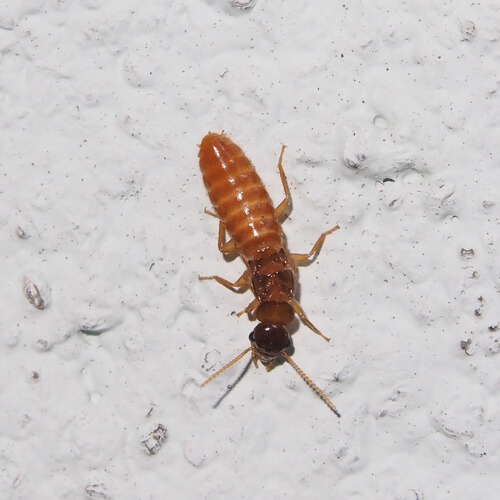
Coptotermes formosanus is a species of termite that has been transported worldwide from its native range in southern China to Taiwan (formerly known as Formosa, where it gets its name), Japan, South Africa, Sri Lanka, Hawaii, and the continental United States.The Formosan termite is often nicknamed the because of its destructive habits due to the large size of its colonies and its ability to consume wood at a rapid rate. A single colony may contain several million individuals (compared with several hundred thousand termites for other subterranean termite species) that forage up to 300 feet (100 m) in soil. A mature Formosan colony can consume as much as 13 ounces of wood a day (about 400 g) and can severely damage a structure in as little as three months. Because of its population size and foraging range, the presence of a colony poses serious threats to nearby structures. Once established, Formosan termites have never been eradicated from an area.
Host Genome
Scaffold| Genome ID | Level | BUSCO Assessment |
|---|---|---|
| GCA_013340265.1 | Scaffold |
C:98.2%[S:96.6%,D:1.6%],F:1.0%,M:0.8%,n:1367
|
Download Genome Files
Related Symbionts
3 recordsSymbiont records associated with Coptotermes formosanus
| Classification | Function | Function Tags | Reference | |
|---|---|---|---|---|
|
Bacteria
|
Gut bacteria (Amplicon data) are involved in the highly efficient digestion of lignocellulose (cellulose and hemicellulose) in the gut system of the … |
cellulose hydrolysis
|
||
|
Bacteria
|
Gut bacteria (Amplicon data) are involved in the digestion of lignocellulose in the wood-feeding termite Coptotermes formosanus. |
cellulose hydrolysis
|
||
|
Isaria fumosorosea K3
Ascomycota |
Fungi
|
Isaria fumosorosea K3 (Fungi) affects the direction of motion by providing 3-octanone and 1-octen-3-ol. |
chemical biosynthesis
|
Metagenome Information
0 recordsMetagenome sequencing data associated with Coptotermes formosanus
| Run | Platform | Location | Date | BioProject |
|---|---|---|---|---|
No metagenomes foundNo metagenome records associated with this host species. |
||||
Amplicon Information
19 recordsAmplicon sequencing data associated with Coptotermes formosanus
| Run | Classification | Platform | Location | Environment |
|---|---|---|---|---|
|
DRR182922
AMPLICON |
16S
|
-
|
Japan
missing |
insect-associated habitat
intestinal |
|
SRR11604158
AMPLICON |
16S
|
-
|
China
23.5 N 113 E |
-
|
|
SRR11604159
AMPLICON |
16S
|
-
|
China
23.5 N 113 E |
-
|
|
SRR11604160
AMPLICON |
16S
|
-
|
China
23.5 N 113 E |
-
|
|
SRR11604161
AMPLICON |
16S
|
-
|
China
23.5 N 113 E |
-
|
|
SRR11604162
AMPLICON |
16S
|
-
|
China
23.5 N 113 E |
-
|
|
SRR11604163
AMPLICON |
16S
|
-
|
China
23.5 N 113 E |
-
|
|
SRR8893844
AMPLICON |
16S
|
-
|
China
missing |
-
|
|
SRR8893832
AMPLICON |
16S
|
-
|
China
missing |
-
|
|
SRR8893840
AMPLICON |
16S
|
-
|
China
missing |
-
|
|
SRR8893841
AMPLICON |
16S
|
-
|
China
missing |
-
|
|
SRR8893845
AMPLICON |
16S
|
-
|
China
missing |
-
|
|
SRR8893839
AMPLICON |
16S
|
-
|
China
missing |
-
|
|
SRR8893833
AMPLICON |
16S
|
-
|
China
missing |
-
|
|
SRR8893836
AMPLICON |
16S
|
-
|
China
missing |
-
|
|
SRR8893837
AMPLICON |
16S
|
-
|
China
missing |
-
|
|
SRR8893838
AMPLICON |
16S
|
-
|
China
missing |
-
|
|
SRR8893842
AMPLICON |
16S
|
-
|
China
missing |
-
|
|
SRR8893843
AMPLICON |
16S
|
-
|
China
missing |
-
|
Related Articles
2 recordsResearch articles related to Coptotermes formosanus
| Title | Authors | Journal | Year | DOI |
|---|---|---|---|---|
|
Dar, MA; Xie, RR; Pandit, RS ... Dong, CC; Sun, JZ
|
Insect Science
|
2022
|
10.1111/1744-7917.13012 | |
|
Yanagawa, Aya; Imai, Tomoya; Akino, Toshiharu; Toh, Yoshihiro; Yoshimura, Tsuyoshi
|
Journal of Chemical Ecology
|
2015
|
10.1007/s10886-015-0649-8 |
Core Microbiome Composition
Core microbiome composition is derived from available metagenomic and amplicon sequencing data, calculated based on the relative abundance and coverage of symbionts across different samples. The representativeness of this analysis may vary depending on the number of available samples and should be considered as a reference guide. See calculation details in Help documentation