Mastotermes darwiniensis
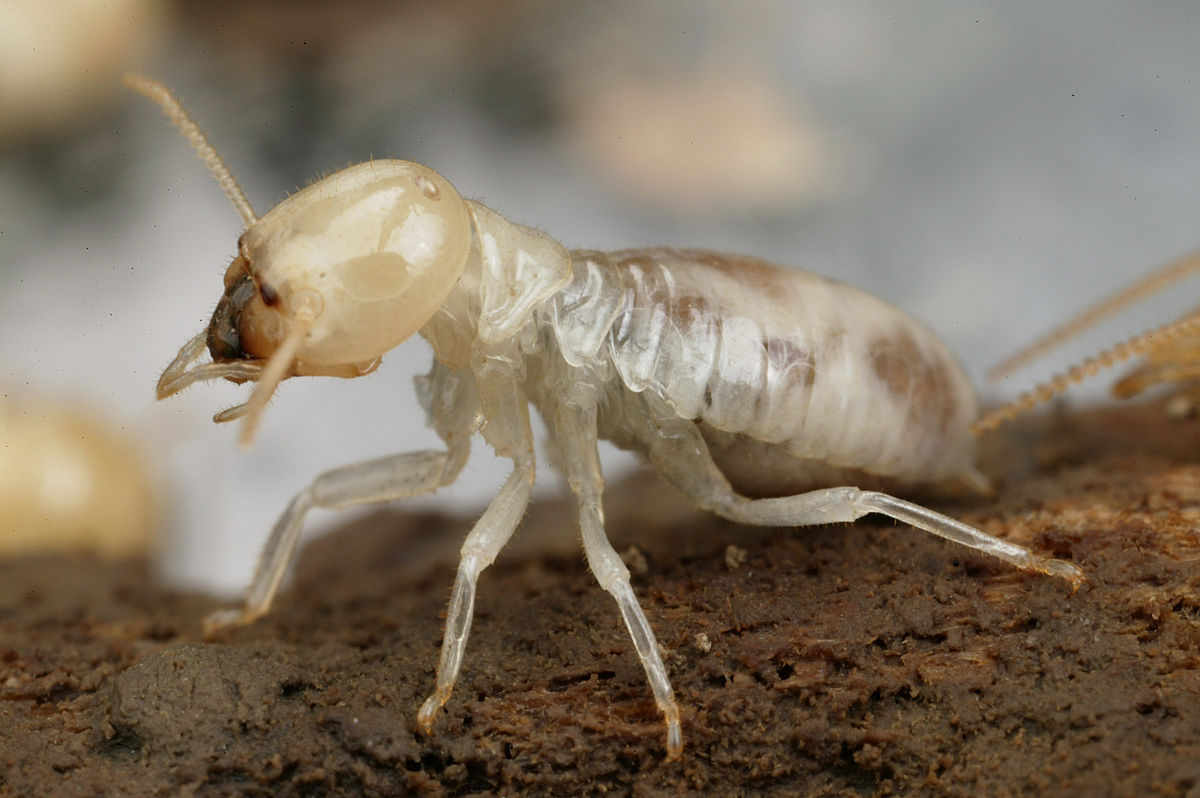
Mastotermes darwiniensis, common names giant northern termite and Darwin termite, is a termite species found only in northern Australia. It is the most primitive extant termite species. Contrary to common belief, this species does not form mounds as the nests are subterranean and inconspicuous. Colonies will readily occupy and infest decomposing wood but primarily live in a complex subterranean network of tunnels and galleries which they use to travel to new food sites. Colonies may eventually split and form isolated satellite colonies.
Host Genome
Related Symbionts
2 recordsSymbiont records associated with Mastotermes darwiniensis
| Classification | Function | Function Tags | Reference | |
|---|---|---|---|---|
|
Blattabacterium cuenoti
Bacteroidota |
Bacteria
|
Blattabacterium cuenoti is involved in collaborative arginine biosynthesis for the host Mastotermes darwiniensis. |
amino acid provision
|
|
|
Blattabacterium
Bacteroidota |
Bacteria
|
Blattabacterium uses nitrogenous wastes in the biosynthesis of essential amino acids and vitamins. |
nitrogen fixation
amino acid provision
vitamin supplementation
|
Metagenome Information
0 recordsMetagenome sequencing data associated with Mastotermes darwiniensis
| Run | Platform | Location | Date | BioProject |
|---|---|---|---|---|
No metagenomes foundNo metagenome records associated with this host species. |
||||
Amplicon Information
1 recordsAmplicon sequencing data associated with Mastotermes darwiniensis
| Run | Classification | Platform | Location | Environment |
|---|---|---|---|---|
|
DRR182946
AMPLICON |
16S
|
-
|
Australia
missing |
insect-associated habitat
intestinal |
Related Articles
1 recordsResearch articles related to Mastotermes darwiniensis
| Title | Authors | Journal | Year | DOI |
|---|---|---|---|---|
|
Sabree, ZL; Huang, CY; Arakawa, G ... Watanabe, H; Moran, NA
|
APPLIED AND ENVIRONMENTAL MICROBIOLOGY
|
2012
|
10.1128/AEM.06540-11 |