Anasa tristis
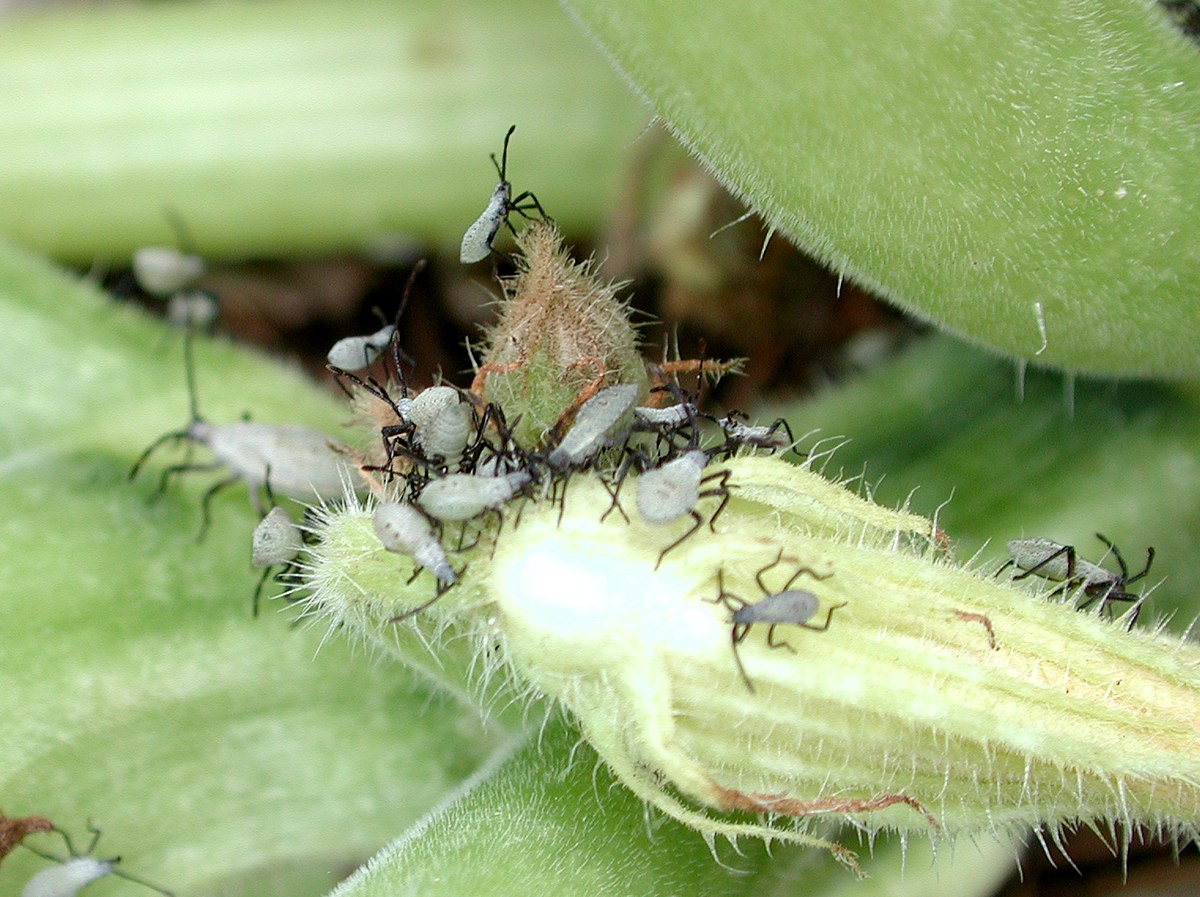
Anasa tristis is a species of bug in the family Coreidae. It is a major pest of squash and pumpkins, found throughout North America, and is a vector of the cucurbit yellow vine disease bacterium. These bugs can emit an unpleasant odor when disturbed. It is commonly known as the squash bug but shares this name with certain other species.
Host Genome
Related Symbionts
4 recordsSymbiont records associated with Anasa tristis
| Classification | Function | Function Tags | Reference | |
|---|---|---|---|---|
|
Caballeronia
Pseudomonadota |
Bacteria
|
Caballeronia prevents the successful, long-term establishment of the phytopathogenic bacterium Serratia marcescens in the squash bug Anasa tristis vi… |
pathogen resistance
|
|
|
Caballeronia
Pseudomonadota |
Bacteria
|
Caballeronia (Burkholderia) improves the survival rate and shortens the development time of Anasa tristis (Pumpkin Bedbug). |
growth regulation
developmental modulation
|
|
|
Caballeronia concitans
Pseudomonadota |
Bacteria
|
- |
||
|
Caballeronia zhejiangensis
Pseudomonadota |
Bacteria
|
- |
Metagenome Information
0 recordsMetagenome sequencing data associated with Anasa tristis
| Run | Platform | Location | Date | BioProject |
|---|---|---|---|---|
No metagenomes foundNo metagenome records associated with this host species. |
||||
Amplicon Information
0 recordsAmplicon sequencing data associated with Anasa tristis
| Run | Classification | Platform | Location | Environment |
|---|---|---|---|---|
No amplicons foundNo amplicon records associated with this host species. |
||||
Related Articles
3 recordsResearch articles related to Anasa tristis
| Title | Authors | Journal | Year | DOI |
|---|---|---|---|---|
|
Mendiola, SY; Stoy, KS; DiSalvo, S ... Civitello, DJ; Gerardo, NM
|
APPLIED AND ENVIRONMENTAL MICROBIOLOGY
|
2022
|
10.1128/AEM.01550-21 | |
|
Stillson, PT; Baltrus, DA; Ravenscraft, A
|
APPLIED AND ENVIRONMENTAL MICROBIOLOGY
|
2022
|
10.1128/aem.02502-21 | |
|
Acevedo, TS; Fricker, GP; Garcia, JR ... Stoy, KS; Gerardo, NM
|
FRONTIERS IN MICROBIOLOGY
|
2021
|
10.3389/fmicb.2021.719112 |